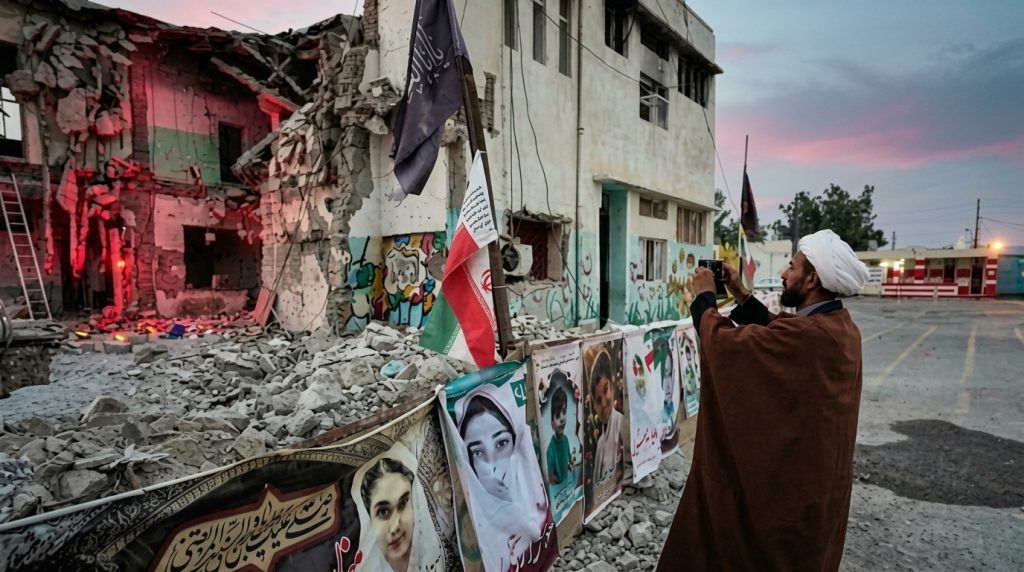
A group of independent human rights experts commissioned by the United Nations’ top human rights body has made a striking claim: UN war crimes Iran strikes findings now state there are “reasonable grounds” to believe the United States committed war crimes during two separate military strikes inside Iran. The assessment adds a serious new legal and diplomatic dimension to a conflict that has already stretched across months of sustained military action.
The fact that UN war crimes Iran strikes conclusions have now been formally raised by human rights experts affiliated with the UN’s top human rights body signals that international scrutiny of the conflict has moved beyond general condemnation into more specific, legally framed allegations.
What the UN experts actually said
According to the findings, the UN war crimes Iran strikes assessment centers on two specific attacks that experts examined closely enough to conclude that reasonable grounds exist supporting the allegation of war crimes. This kind of language, “reasonable grounds,” is a specific legal threshold commonly used in human rights investigations, indicating that investigators found sufficiently credible evidence to warrant the claim, even though it stops short of a definitive legal conviction, which would require a formal judicial process.
The experts involved in producing the UN war crimes Iran strikes report were commissioned specifically by the UN’s top human rights body, giving the findings a level of institutional weight that distinguishes them from advocacy group allegations or media investigations alone, even though the UN human rights mechanism itself does not have direct prosecutorial authority.
Why this distinction matters legally
It’s important to understand what the UN war crimes Iran strikes findings do and don’t represent at this stage. A finding of “reasonable grounds” is not the same as a formal legal conviction or an indictment from a body like the International Criminal Court. Rather, it represents an official assessment that available evidence meets a threshold serious enough to warrant further investigation and formal international attention, rather than a final legal determination of guilt.
This distinction matters considerably for how the UN war crimes Iran strikes findings are likely to be received internationally, since the practical and diplomatic consequences of an investigatory finding differ significantly from those of an actual prosecution or conviction, even as both carry real reputational and political weight.
How the two strikes in question have been described
While full details of the specific strikes examined in the UN war crimes Iran strikes assessment continue to emerge through follow-up reporting, the fact that investigators focused on two particular incidents, rather than making a broader blanket claim about the entire conflict, suggests a more targeted and evidence-specific approach to the investigation. This kind of case-specific focus is typical of how international human rights bodies structure their formal assessments, building findings around particular, well-documented incidents rather than sweeping general claims.
Human rights investigators conducting reviews of this kind typically rely on a combination of satellite imagery, witness testimony, physical evidence, and official statements from involved parties, a methodology aimed at building as rigorous a factual record as possible before making findings that carry the “reasonable grounds” designation.
How the US has responded
Official American response to the UN war crimes Iran strikes findings has not been extensively detailed in early reporting, though allegations of this nature typically draw firm rejection from involved governments, particularly when the underlying conflict remains active and framed by the administration as necessary military action rather than unlawful conduct. Historically, the United States has disputed similar international findings related to its military operations, often citing its own internal review processes as sufficient oversight.
The broader diplomatic response to the UN war crimes Iran strikes conclusions will likely unfold over the coming days and weeks, as allied nations, international bodies, and human rights organizations offer their own assessments of how seriously to treat the findings.
Why this adds pressure amid an already tense conflict
This finding arrives at a particularly sensitive moment, given that the broader US-Iran conflict has already stretched across multiple months with significant military engagement on both sides. The UN war crimes Iran strikes allegation adds an international legal and moral dimension to a conflict that has largely been discussed in terms of military strategy and geopolitical positioning up to this point.
Diplomatic analysts note that international war crimes allegations, even at the “reasonable grounds” stage rather than formal prosecution, can meaningfully affect how allied nations engage with an ongoing conflict, potentially complicating coalition-building or international support depending on how seriously the broader international community treats the UN war crimes Iran strikes findings.
What could happen next
Following a finding of this nature, several paths are possible depending on how international bodies and individual nations choose to respond to the UN war crimes Iran strikes conclusions. These can range from formal referrals to international courts, additional independent investigations, diplomatic pressure campaigns, or, in some cases, findings that generate significant attention initially but don’t lead to further formal legal action due to jurisdictional or political complications.
Given the United States’ relationship with international courts like the ICC, which it has not fully recognized in all circumstances, the practical path from these UN war crimes Iran strikes findings toward any formal prosecution remains genuinely uncertain and would likely face significant jurisdictional obstacles regardless of how strong the underlying evidence is judged to be.
What this means going forward
Regardless of the ultimate legal outcome, the UN war crimes Iran strikes findings mark a significant moment in how the international community is formally engaging with the conduct of the ongoing conflict. Whether this leads to further formal action or remains primarily a diplomatic and reputational pressure point, the assessment adds a new layer of international scrutiny to a war that shows no clear signs of resolution.
For now, the international community, allied governments, and human rights organizations are likely to continue closely watching how both the United States and broader international bodies respond to these serious allegations in the days ahead.