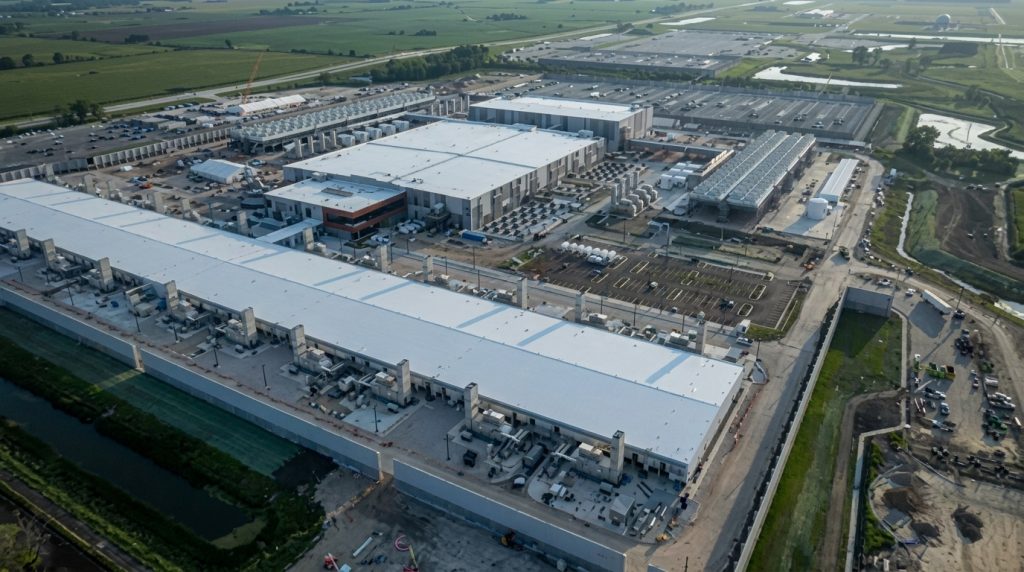
New York has just become the first state in the country to formally block new AI data centers, a move that instantly positions the New York AI data center ban as one of the most significant state-level pushes against the artificial intelligence buildout happening across the United States. While other states have debated regulations and permitting slowdowns, New York is the first to take the more dramatic step of an outright prohibition.
The New York AI data center ban arrives at a moment when the AI industry is expanding data center capacity at a historic pace nationwide, making this decision a notable outlier against the broader national trend of states actively courting this kind of investment.
What the New York AI data center ban actually covers
While specific regulatory language continues to be clarified, the core of the New York AI data center ban centers on preventing new large-scale AI-focused data center construction within the state, a move lawmakers have tied to concerns about energy consumption, water usage, and strain on local power grids. Data centers built specifically to support AI model training and inference have become notorious for their enormous electricity demands, often requiring power comparable to that of a small city.
Supporters of the New York AI data center ban have argued that without intervention, the state’s existing power infrastructure risks being overwhelmed by a wave of new facilities competing for the same limited grid capacity that residential and commercial customers already depend on.
Why New York decided to act now
The timing of the New York AI data center ban comes as the AI industry is in the middle of one of its most aggressive infrastructure expansion phases to date, with companies like Amazon, OpenAI, and others announcing massive new deployment organizations and compute investments. Lawmakers behind the ban have pointed to rising electricity costs for ordinary residents as a key motivating factor, arguing that data center demand has been quietly pushing up utility rates in ways that disproportionately affect everyday households rather than the tech companies driving the demand.
Environmental and community advocacy groups have also played a role in pushing for the New York AI data center ban, citing concerns about water usage for cooling systems and the broader environmental footprint of large-scale AI infrastructure being built without sufficient community input or long-term planning safeguards.
How the tech industry has responded
Unsurprisingly, the New York AI data center ban has drawn criticism from technology industry representatives, who argue that blocking new facilities outright, rather than pursuing more targeted regulation, risks pushing valuable investment and jobs to other states actively competing to attract this kind of infrastructure. Industry advocates have warned that New York risks falling behind in an industry increasingly viewed as central to future economic competitiveness.
Some technology executives have specifically framed the New York AI data center ban as a missed opportunity, arguing that with proper planning and grid investment, data centers could be developed in ways that support both AI growth and local energy needs simultaneously, rather than treating the two goals as fundamentally incompatible.
What this means for other states watching closely
Because the New York AI data center ban is the first of its kind at the state level, policymakers in other states are watching closely to see how the policy plays out in practice, and whether it becomes a model other jurisdictions consider adopting themselves. Several other states have already implemented more moderate measures, such as stricter permitting requirements or temporary moratoriums, but none have gone as far as an outright ban until now.
The broader question raised by the New York AI data center ban is whether other states facing similar grid strain and public pressure around rising electricity costs will follow New York’s lead, or whether most will continue pursuing less restrictive regulatory approaches that attempt to balance AI growth with local concerns.
The bigger national context behind this decision
The New York AI data center ban lands amid an extraordinary national buildout of AI infrastructure, with companies investing unprecedented sums into new compute capacity to keep pace with surging demand for AI training and deployment. This national backdrop makes New York’s decision to block new facilities entirely a particularly notable departure from the dominant trend of states actively competing to attract this exact kind of investment through incentives and streamlined permitting.
Analysts tracking the AI infrastructure boom note that the New York AI data center ban could set an important precedent, testing whether public concerns about energy costs and environmental impact can meaningfully slow the pace of AI infrastructure expansion, even as demand for compute capacity continues accelerating nationally.
What comes next
In the aftermath of the New York AI data center ban, attention will likely turn to how existing data center operators in the state are affected, whether any legal challenges emerge from industry groups, and how neighboring states respond to the potential redirection of investment that might otherwise have gone to New York. Lawmakers have indicated the policy will be reviewed periodically, leaving open the possibility of adjustments as the situation develops.
For now, the New York AI data center ban stands as a landmark moment in the broader national conversation about how to balance the explosive growth of artificial intelligence infrastructure against very real concerns about energy costs, grid capacity, and environmental impact facing ordinary residents.