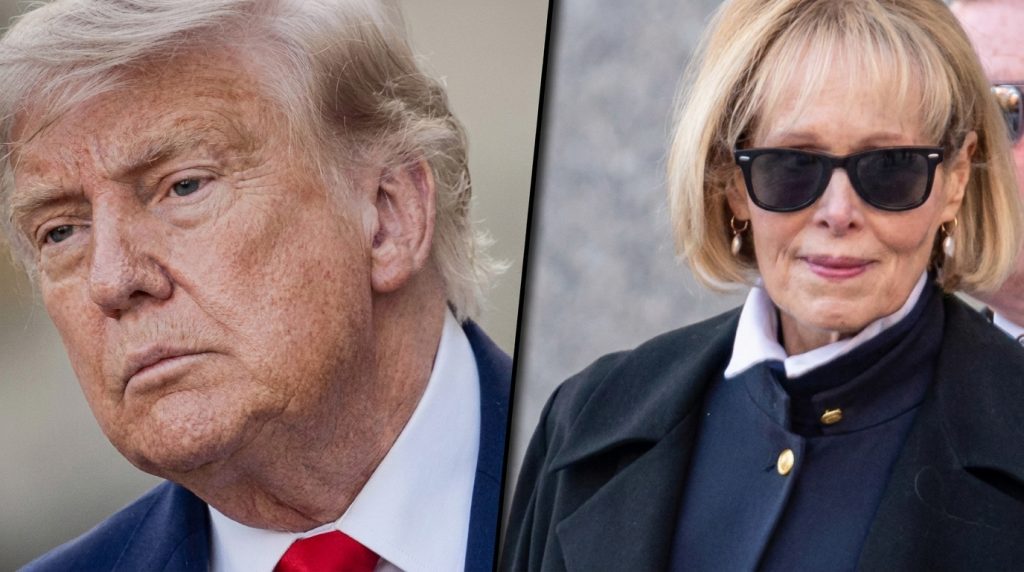
After years of delay tactics and appeals, Trump ordered to pay Carroll became the definitive headline this week, closing out one of the longest-running legal battles of his presidency. A federal appeals court rejected his final attempt to block the payout, clearing the way for writer E. Jean Carroll to finally collect nearly $5.8 million in damages and accrued interest.
The ruling that Trump ordered to pay Carroll came just hours after a separate judge had already ordered the funds released, creating a rapid one-two legal sequence that effectively ended years of litigation delay in a single day.
How Trump ordered to pay Carroll actually unfolded this week
The decision that Trump ordered to pay Carroll moved through two separate court actions within hours of each other. First, Manhattan federal District Court Judge Lewis Kaplan ruled that Carroll could receive nearly $5.8 million from funds Trump had deposited with the court three years earlier to satisfy the original May 2023 jury award. Trump’s legal team immediately appealed that decision to the 2nd U.S. Circuit Court of Appeals, asking for an emergency pause on releasing the money.
That request was denied Wednesday night, meaning Trump ordered to pay Carroll now stands as a final, enforceable order rather than a temporary ruling still subject to immediate reversal. The appeals court’s denial did not address the broader merits of Trump’s case, only the specific request to delay payment while further appeals continue.
Why Trump’s legal team fought so hard to delay payment
Attorneys for Trump argued that releasing the funds before the Supreme Court fully closed out every possible avenue of appeal would cause “irreparable harm,” since Carroll has publicly stated she intends to donate the money once she receives it, making the funds difficult to recover if a higher court later overturned the verdict. This argument became central to why Trump ordered to pay Carroll took as long as it did to actually materialize into a real payment.
Judge Kaplan explicitly rejected this reasoning in his written order, stating plainly that Trump “has been stalling this case for years” and that disbursing the funds would not cause the irreparable harm his legal team claimed. Kaplan added that in the unlikely event the Supreme Court reversed course entirely, Trump could pursue legal action to recover any improperly disbursed funds, undercutting the core argument against payment.
The Supreme Court’s role in getting here
This entire sequence tracing back to Trump ordered to pay Carroll only became possible after the Supreme Court declined on June 29 to hear Trump’s appeal of the underlying verdict, doing so without any noted dissents among the justices. That refusal effectively exhausted his primary path to overturning the jury’s original finding that he sexually abused and defamed Carroll.
Undeterred, Trump’s legal team filed a long-shot petition asking the Supreme Court to reconsider its own decision not to hear the case, a request that courts very rarely grant once already denied. It was this pending reconsideration request that Trump’s lawyers used as their basis for arguing the money shouldn’t be released yet, an argument both Kaplan and the appeals court ultimately rejected.
What E. Jean Carroll’s legal team has said
Carroll’s attorney, Roberta Kaplan, has been characteristically direct throughout the process leading to Trump ordered to pay Carroll, stating in an earlier filing that “it is time for him to pay Carroll” and describing the years of delay tactics as reaching their natural end. Following the original 2023 jury verdict, Carroll’s team has consistently pushed back against what they characterize as an extended pattern of stalling by Trump’s legal representatives.
With Trump ordered to pay Carroll now finalized at the appeals court level, her lawyers have signaled that they view this as the effective conclusion of a legal saga that began years earlier, even as Trump’s team continues pursuing other avenues related to a separate, larger defamation judgment against him.
The bigger picture: two separate Carroll verdicts
It’s worth noting that Trump ordered to pay Carroll in this specific ruling relates only to the original 2023 jury verdict of $5 million plus interest. A second, much larger judgment of $83.3 million was awarded to Carroll in a separate 2024 trial over different defamatory statements Trump made in 2019 while he was president. That second case remains under separate appeal, with Trump’s legal team arguing his 2019 comments should be protected by presidential immunity.
This means that even with Trump ordered to pay Carroll now resolved for the smaller judgment, the two parties remain locked in ongoing litigation over the much larger sum, meaning this week’s ruling closes one chapter of the legal battle rather than the entire story.
What Trump’s team has said publicly
In response to the ruling, a spokesperson for Trump’s legal team issued a statement calling the case part of a broader pattern of “Witch Hunts,” saying, “President Trump will keep winning against Liberal Lawfare, as he continues to focus on his mission to Make America Great Again.” The statement did not directly address the specifics of why Trump ordered to pay Carroll this week, instead framing the underlying case in broader political terms.
With the money now cleared for release, attention turns to whether any further legal maneuvering can meaningfully affect the outcome, though legal experts note that once funds are disbursed following a final court order, reversing that transfer becomes exceptionally difficult even if later appeals proceedings continue in Trump’s favor.