The latest Federal Reserve interest rate decision brought an end, at least temporarily, to a streak that had shaped household finances for months. After three consecutive rate cuts through the back half of 2025, the central bank chose to hold steady in January, leaving borrowers and savers alike trying to figure out what comes next.
For anyone with a mortgage, a savings account, or a credit card balance, the Federal Reserve interest rate decision isn’t just a headline, it’s a number that quietly shapes monthly bills and long-term financial planning.
What the Federal Reserve actually decided
Meeting on January 27 and 28, the Federal Open Market Committee voted to maintain the federal funds rate within its existing target range of 3.5 percent to 3.75 percent. This Federal Reserve interest rate decision was widely expected by markets heading into the meeting, following a string of three straight quarter-point cuts throughout 2025 that had gradually lowered borrowing costs across the economy.
The vote wasn’t unanimous. Two committee members, Stephen Miran and Christopher Waller, preferred cutting rates by another quarter point at this meeting, signaling some internal disagreement about whether the pause was the right call. Still, the majority favored holding steady, and the Federal Reserve interest rate decision reflected that consensus.
Why the Fed chose to pause now
Central bank officials pointed to a mix of factors behind this Federal Reserve interest rate decision, including data suggesting the economy remains resilient even after months of gradual rate cuts. With inflation readings improving but not yet fully at target, and employment data showing signs of stabilizing after a rocky 2025, policymakers apparently felt less urgency to continue cutting immediately.
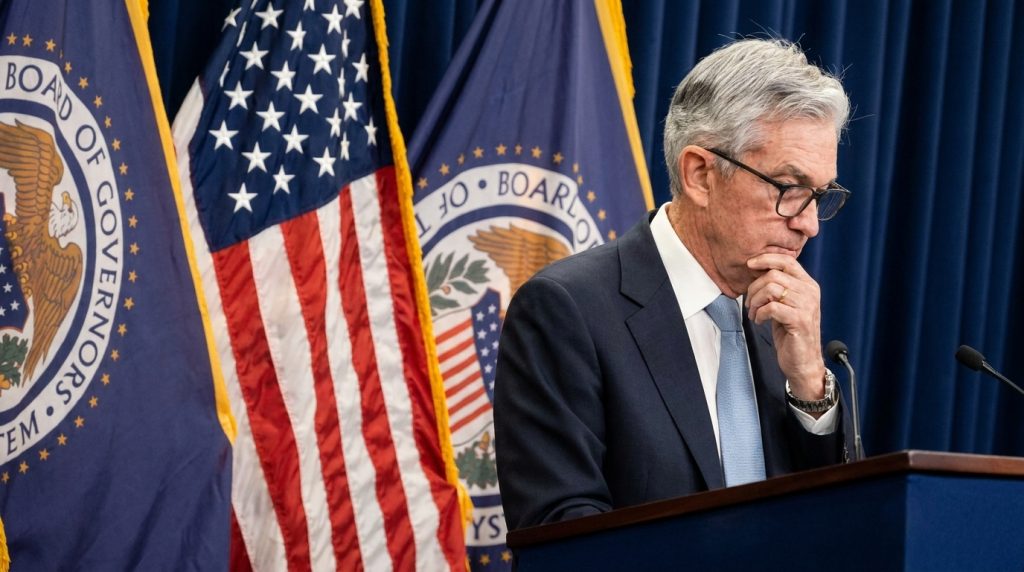
Fed Chair Jerome Powell characterized the approach during his press conference following the meeting, noting that with rates already lowered meaningfully over the prior months, the committee felt comfortable letting incoming data guide its next move rather than committing to further cuts on a fixed schedule. This kind of data-dependent messaging has become a defining feature of recent Federal Reserve interest rate decisions.
What this means for mortgages and loans
For anyone shopping for a mortgage or considering a major loan, the Federal Reserve interest rate decision to hold steady means borrowing costs are likely to remain roughly where they’ve been in recent weeks, rather than dropping further in the immediate term. Since mortgage rates don’t move in perfect lockstep with the federal funds rate but are heavily influenced by expectations around it, this pause suggests relative stability rather than the additional relief some borrowers may have been hoping for.
Credit card holders carrying variable-rate balances are also unlikely to see meaningful near-term changes following this Federal Reserve interest rate decision, since those rates typically adjust based on the same benchmark that just held steady rather than continuing to decline.
What this means for savers
On the flip side, savers with high-yield savings accounts or certificates of deposit may actually welcome this Federal Reserve interest rate decision, since a pause in rate cuts means the relatively attractive yields many banks have been offering are less likely to shrink dramatically in the immediate future. Financial advisors have noted that this environment still favors savers locking in current rates through CDs if they’re concerned about future cuts eventually pulling savings yields lower.
Markets react to the pause
Following this Federal Reserve interest rate decision, futures traders adjusted their expectations for the year ahead, with the CME Group’s FedWatch tool showing an increased probability that rates will also remain unchanged at the Fed’s next meeting in March. Market expectations still lean toward at least one additional rate cut sometime later in the year, though the timing remains uncertain given the data-dependent approach the Fed has signaled.
Treasury yields moved modestly in response to the announcement, reflecting the market’s view that this Federal Reserve interest rate decision was largely already priced in before the meeting even took place, limiting any dramatic market swings on the news itself.
What comes next for interest rates
Looking ahead, the next opportunity for another Federal Reserve interest rate decision comes at the March meeting, scheduled for March 17 and 18. Between now and then, officials will be watching incoming inflation and employment data closely, particularly given that a partial government shutdown briefly disrupted the flow of some economic reports earlier in the year, adding an extra layer of complexity to the data policymakers rely on.
For everyday households, the practical takeaway from this Federal Reserve interest rate decision is straightforward: don’t expect dramatic near-term changes to borrowing costs or savings yields, but keep watching upcoming data releases, since another rate move later in the year remains firmly on the table depending on how the economy performs in the months ahead.