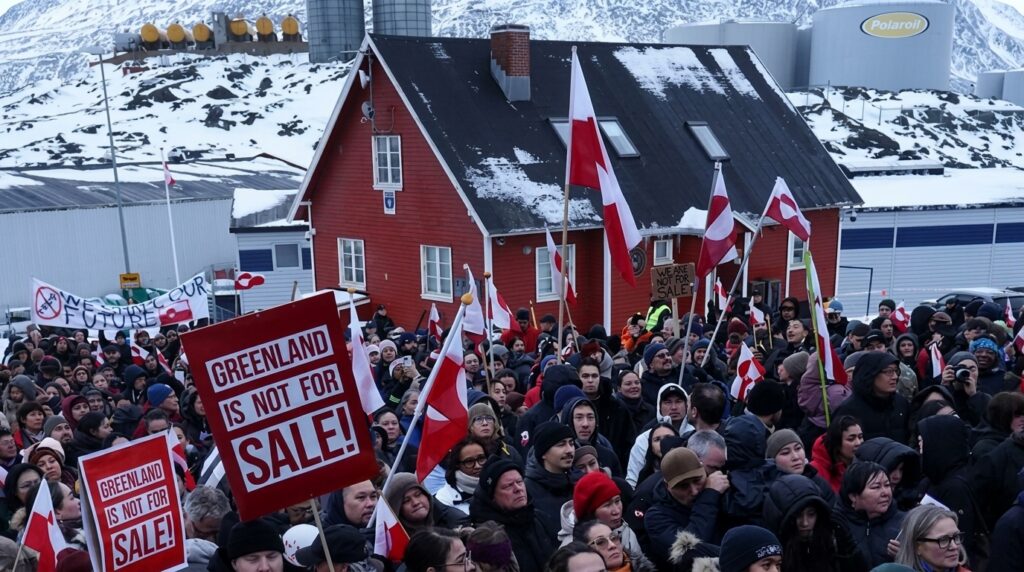
Wall Street had one of its worst days in months after a fresh political flashpoint sent shockwaves through global markets. The Greenland tariffs stock market crash erased weeks of gains in a single trading session, catching even seasoned investors off guard with the speed and scale of the sell-off.
What started as a geopolitical dispute over Greenland quickly turned into a full-blown market event, and the Greenland tariffs stock market crash is now being discussed as one of the defining financial stories of the year so far.
What actually triggered the Greenland tariffs stock market crash
The turmoil began after President Trump announced that eight NATO member countries would face escalating tariffs unless a deal was reached over what he described as the “complete and total purchase” of Greenland. The tariffs were set to start at ten percent and climb sharply over the following months if no agreement was reached, a threat that markets did not take lightly.
Within a single session, the Dow Jones Industrial Average dropped more than 870 points, while the S&P 500 fell over two percent and the Nasdaq Composite slid nearly two and a half percent. Analysts quickly labeled it the worst trading day in months, and the Greenland tariffs stock market crash pushed both the S&P 500 and Nasdaq into negative territory for the year, reversing earlier gains investors had been counting on.
“Markets can usually shrug off political rhetoric, but this was different because of how specific and escalatory the threat was,” said one market strategist tracking the sell-off in real time. “The Greenland tariffs stock market crash reflected genuine uncertainty about where this actually goes next.”
Why NATO allies became targets
The list of countries facing tariffs under this threat included several long-standing NATO allies, a detail that added an unusual dimension to the Greenland tariffs stock market crash. Trade tensions between allied nations are typically resolved through diplomatic channels rather than public tariff threats, and the aggressive tone of the announcement left many investors uncertain about how quickly, or whether, the situation could be resolved through normal negotiation.
The president further escalated tensions by threatening a 200 percent tariff on French wine and champagne after French President Emmanuel Macron signaled reluctance to engage with the proposed arrangement, a move that intensified concerns feeding into the Greenland tariffs stock market crash and suggested the dispute could expand well beyond its original scope.
Which sectors took the biggest hit
Automakers and luxury goods companies were among the hardest hit as the Greenland tariffs stock market crash spread beyond Wall Street into European markets as well. Germany’s DAX index fell more than one percent, while France’s main index dropped nearly two percent, reflecting how quickly the tariff threat rippled across the Atlantic and rattled companies with heavy transatlantic trade exposure.
In the United States, technology stocks also took a meaningful hit, with several major companies posting notable year-to-date declines as the Greenland tariffs stock market crash unfolded. Investors rotated toward safer assets, and the Cboe Volatility Index, often called Wall Street’s fear gauge, spiked as uncertainty around the tariff threat intensified throughout the session.
The bigger picture behind the volatility
Despite the sharp single-day drop tied to the Greenland tariffs stock market crash, some analysts note that smaller companies with limited international exposure actually outperformed larger multinational firms during the broader sell-off, since domestically focused businesses are less directly affected by tariff disputes. This divergence highlighted just how targeted the market’s reaction was to specific trade policy risk rather than a broad economic downturn.
Still, the scale of the single-day decline caught attention across financial media, with several outlets describing the Greenland tariffs stock market crash as a reminder of how sensitive markets remain to unexpected geopolitical announcements, even during periods when underlying economic data has been relatively stable.
What investors are watching next
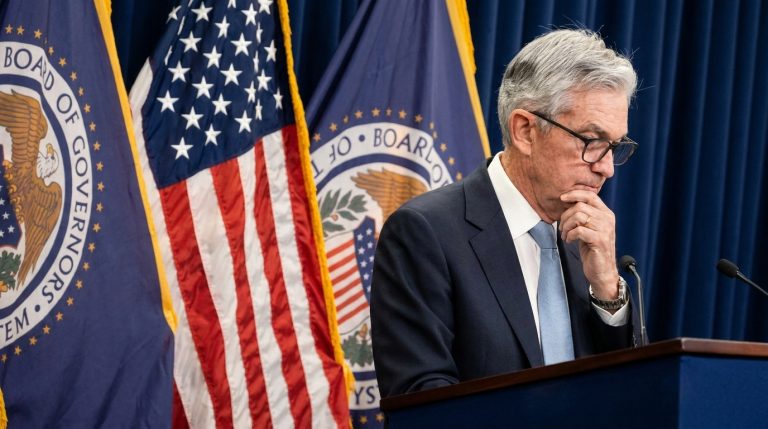
Following the initial shock, attention quickly turned to how affected countries might respond and whether a negotiated resolution could de-escalate tensions before the proposed tariffs take effect. Financial commentators tracking the Greenland tariffs stock market crash have pointed to the Federal Reserve’s upcoming policy meeting as a key moment that could either calm or further unsettle markets, depending on how policymakers address the added uncertainty in their public remarks.
Treasury officials have also faced questions about the administration’s broader trade strategy, with some suggesting the Greenland tariffs stock market crash could factor into ongoing conversations about interest rate policy if the volatility persists or trade tensions escalate further in the weeks ahead.
What this means for everyday investors
For everyday investors with retirement accounts or index fund holdings, the Greenland tariffs stock market crash serves as a reminder of how quickly geopolitical headlines can translate into real portfolio volatility. Financial advisors generally caution against making dramatic changes based on a single volatile session, noting that markets have historically recovered from politically driven shocks once clarity emerges, even when the initial reaction is severe.
Whether this specific dispute resolves quickly or drags on remains uncertain, but the Greenland tariffs stock market crash has already reestablished a lesson many investors learn repeatedly: political rhetoric, especially when tied to concrete policy threats like tariffs, can move markets just as forcefully as traditional economic data, sometimes in a single afternoon.